


feature / designmatters / spatial-experience-design / interaction-design / photography-and-imaging / illustration / product-design / art
July 31, 2026
By Mike R. Winder
THROWING SHADE
A Trio of Designmatters Courses Explore Solutions for Thriving in L.A. During Extreme Heat
We’ve all heard the expression, “If you can’t stand the heat, get out of the kitchen.” Well, forget the kitchen. These days, just stepping out your front door can feel like walking into a sauna.
There's no escaping the fact that cities all over the globe are experiencing record-setting high temperatures. With every day that passes, the need for solutions to living with extreme heat becomes more urgent than ever.
This past spring, a trio of ArtCenter Designmatters studios tackled this very issue. Using Los Angeles County’s recently adopted Heat Action Plan as a basis for research, students from across disciplines explored a variety of ways to help the citizens of Greater L.A. thrive as the mercury rises.


In Cooling Ecologies: How Native Plants Help Mitigate Extreme Heat, taught by Joshua Halstead (BFA 12) and Wendy Thai (BFA 07), three student teams designed impactful and culturally responsive awareness campaigns and education strategies focused on how native plants impact L.A.’s ecosystem and keep communities cool during extreme heat events.



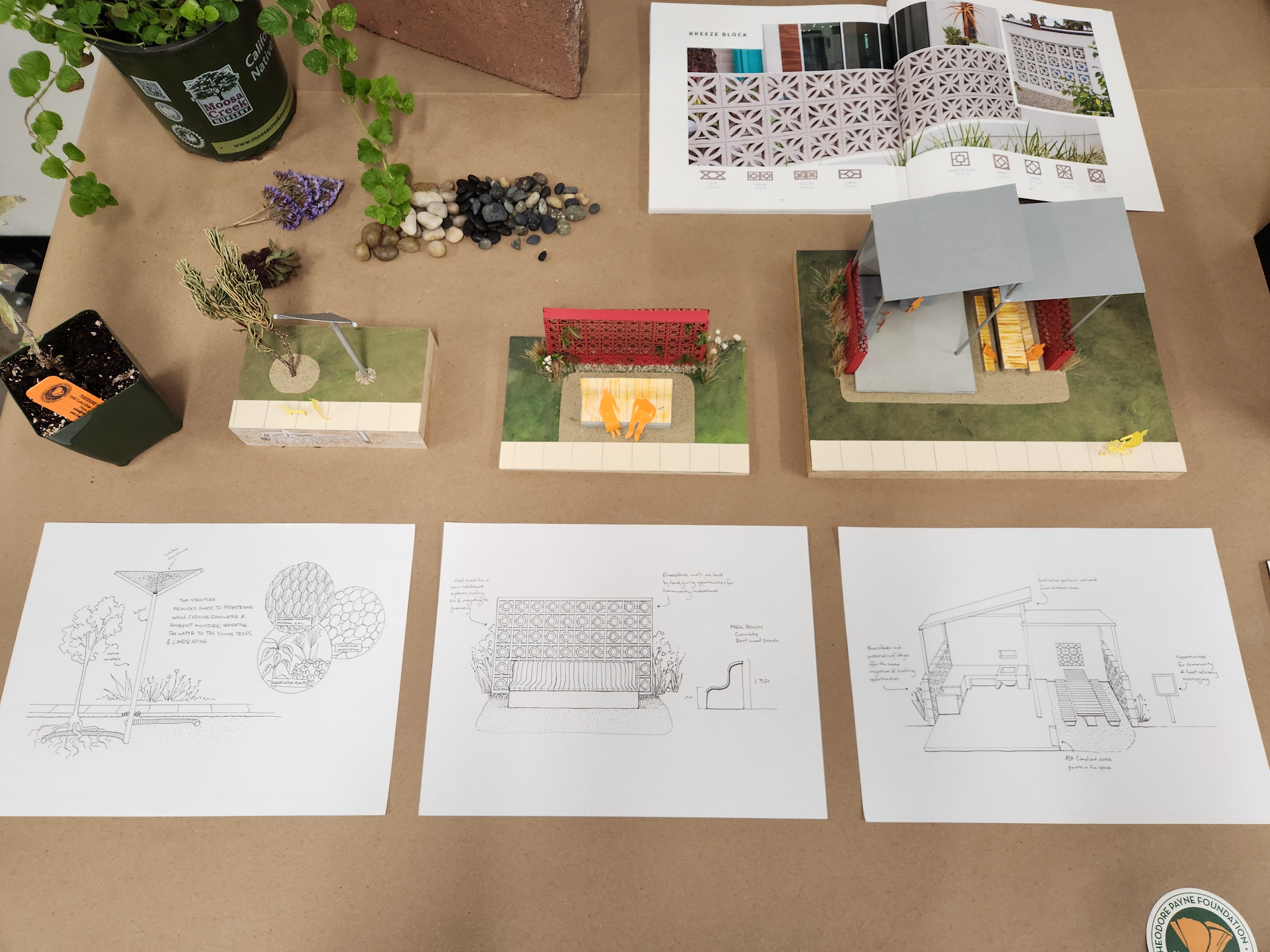
In Throwing Shade: Cooling L.A.’s Public Spaces, taught by Leigh Hoffman and James Meraz, students looked at how shade is distributed across the city and developed solutions for three locations—Mariachi Plaza, Hollenbeck Park and the Watts Towers Arts Center—that treat cooling, care and public space as a shared right.
And in Interactive Data Visualization + Extreme Heat, taught by Santiago Lombeyda, students explored how environmental data could help users better accomplish tasks (e.g. biking through the city, walking a dog, volunteering during the Olympics) in areas affected by rising heat.
“These students conducted socio-cultural research, met with subject matter experts, and mined their own personal experiences to conceptualize design-driven cooling solutions,” said Jennifer May, executive director of the College’s Designmatters program, which this year celebrates its 25th anniversary. “Extreme heat will increasingly impact our communities, and designers will play a key role in helping us all mitigate and adapt.”